Elena Fabrikant
Elena Fabrikant
Portfolio
Portfolio
Petal -
Situational Awareness
Petal -
Situational Awareness
Petal -
Situational Awareness
The prehospital triage process, remains analog and static to this day. First responders work under extreme time pressure, high cognitive load, and with incomplete information. Patients’ conditions can change without the triage team noticing. As a result, information critical to the emergency response is lost, which makes it difficult to maintain an overview of the situation and can hinder sound decision-making.
The prehospital triage process, remains analog and static to this day. First responders work under extreme time pressure, high cognitive load, and with incomplete information. Patients’ conditions can change without the triage team noticing. As a result, information critical to the emergency response is lost, which makes it difficult to maintain an overview of the situation and can hinder sound decision-making.
The prehospital triage process, remains analog and static to this day. First responders work under extreme time pressure, high cognitive load, and with incomplete information. Patients’ conditions can change without the triage team noticing. As a result, information critical to the emergency response is lost, which makes it difficult to maintain an overview of the situation and can hinder sound decision-making.

Proposal
In Triage Processes, there is a clear gap between what happens in the field today and what would be possible by transferring process data into the digital realm. Petal observes how we could maintain continuous visibility across patients, so teams know who needs to be treated and transported first.
This work was created in a group of three as part of the Minor User Experience at Zurich University of the Arts (ZHdK), supervised by Martin Meier and Florian Wille.
Client
Client
IDR Grant ZhdK
IDR Grant ZhdK
Role
Role
UI Design, Product Design, 3D
UI Design, Product Design, 3D
Category
Category
Digital and physical Service
Digital and physical Service
Softwares Used
Softwares Used
Figma, Blender, Onshape, Weavy AI
Figma, Blender, Onshape, Weavy AI

The Research Process
The Research
Process
The Research Process
We conducted desk research and expert interviews to understand how triage actually works in the field and where the critical breakdowns happen. What became clear was that no existing tool adequately addresses the real-time monitoring problem in mass casualty scenarios. What would actually help a first responder who is already overwhelmed?
We conducted desk research and expert interviews to understand how triage actually works in the field and where the critical breakdowns happen. What became clear was that no existing tool adequately addresses the real-time monitoring problem in mass casualty scenarios. What would actually help a first responder who is already overwhelmed?
We conducted desk research and expert interviews to understand how triage actually works in the field and where the critical breakdowns happen. What became clear was that no existing tool adequately addresses the real-time monitoring problem in mass casualty scenarios. What would actually help a first responder who is already overwhelmed?

Proposal
In Triage Processes, there is a clear gap between what happens in the field today and what would be possible by transferring process data into the digital realm. Petal observes how we could maintain continuous visibility across patients, so teams know who needs to be treated and transported first.
This work was created in a group of three as part of the Minor User Experience at Zurich University of the Arts (ZHdK), supervised by Martin Meier and Florian Wille.
Client
IDR Grant ZhdK
Role
UI Design, Product Design, 3D
Category
Digital and physical Service
Softwares Used
Figma, Blender, Onshape, Weavy AI
Petal
Petal
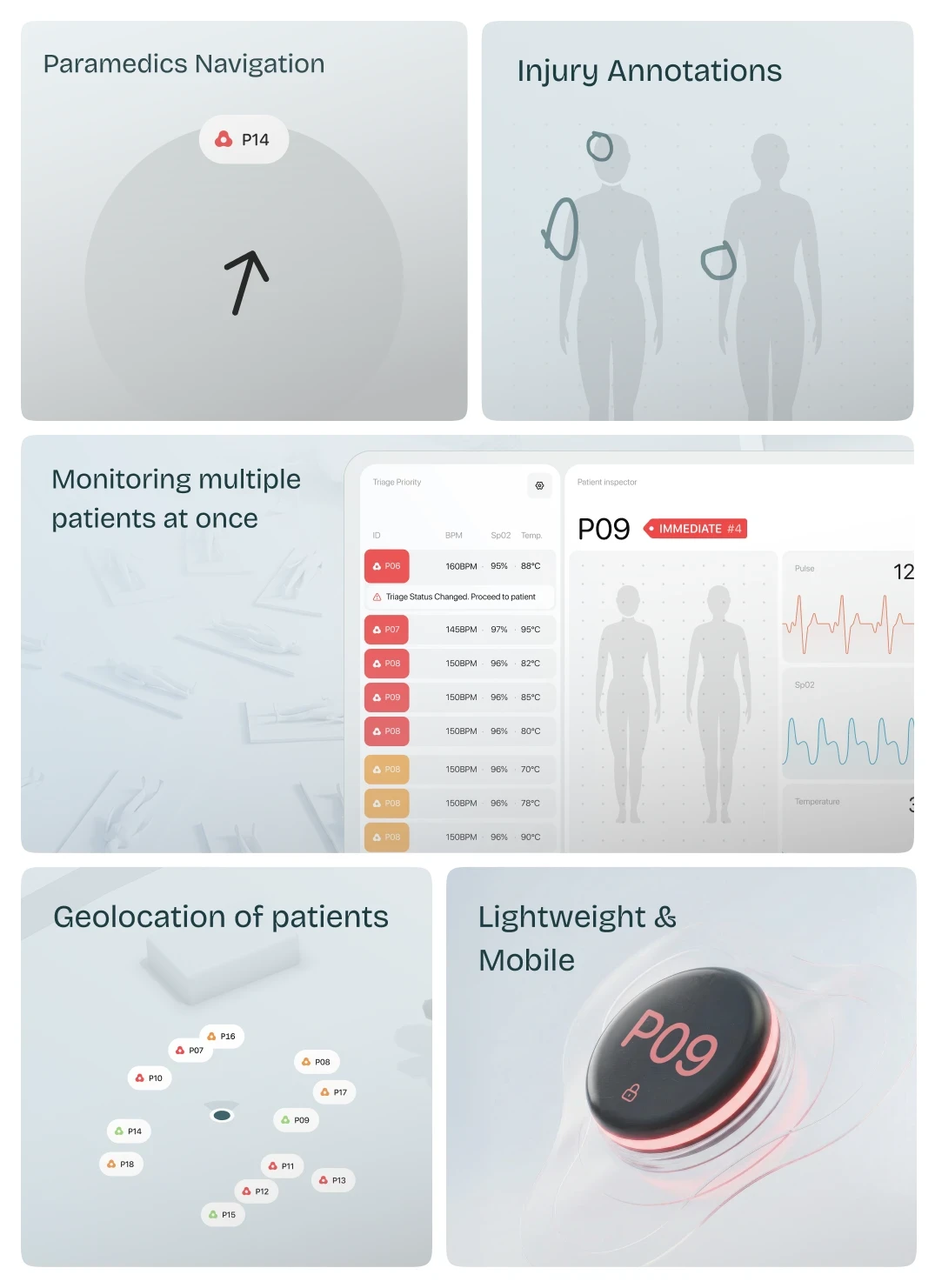
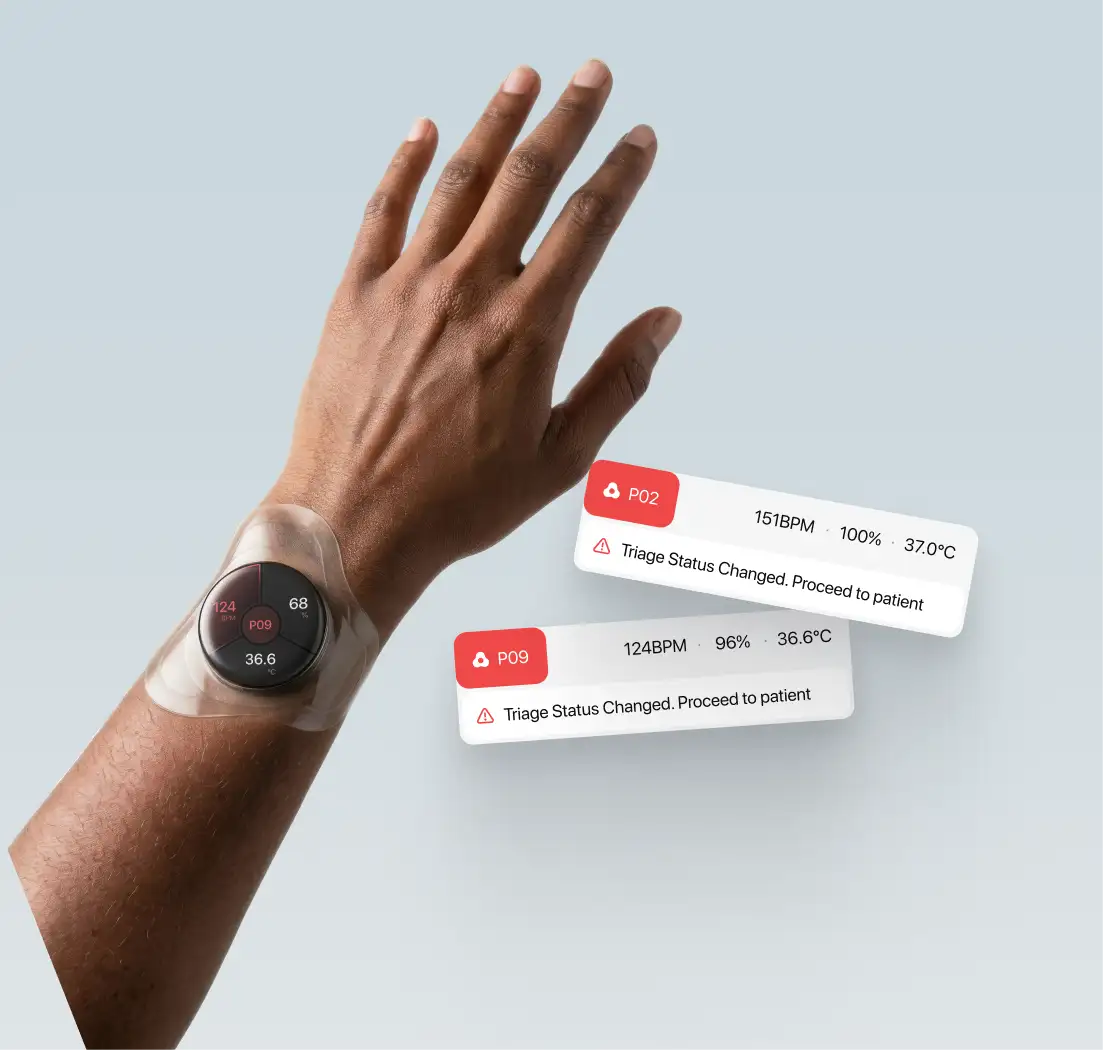
Petal consists of a lightweight wearable device, and a shared interface for the triage team. The wearable continuously tracks vital signs, and transmits this data to the hub. The hubs interface shows triage status as a prioritized list and as geolocated markers on a map of the incident site, so responders always know where everyone is and who is deteriorating. When a patient's triage status changes, the system sends an immediate alert. A patient inspector view allows responders to focus into individual vitals and annotate injuries directly onto a body diagram.
Petal consists of a lightweight wearable device, and a shared interface for the triage team. The wearable continuously tracks vital signs, and transmits this data to the hub. The hubs interface shows triage status as a prioritized list and as geolocated markers on a map of the incident site, so responders always know where everyone is and who is deteriorating. When a patient's triage status changes, the system sends an immediate alert. A patient inspector view allows responders to focus into individual vitals and annotate injuries directly onto a body diagram.

The Sensor
The Sensor
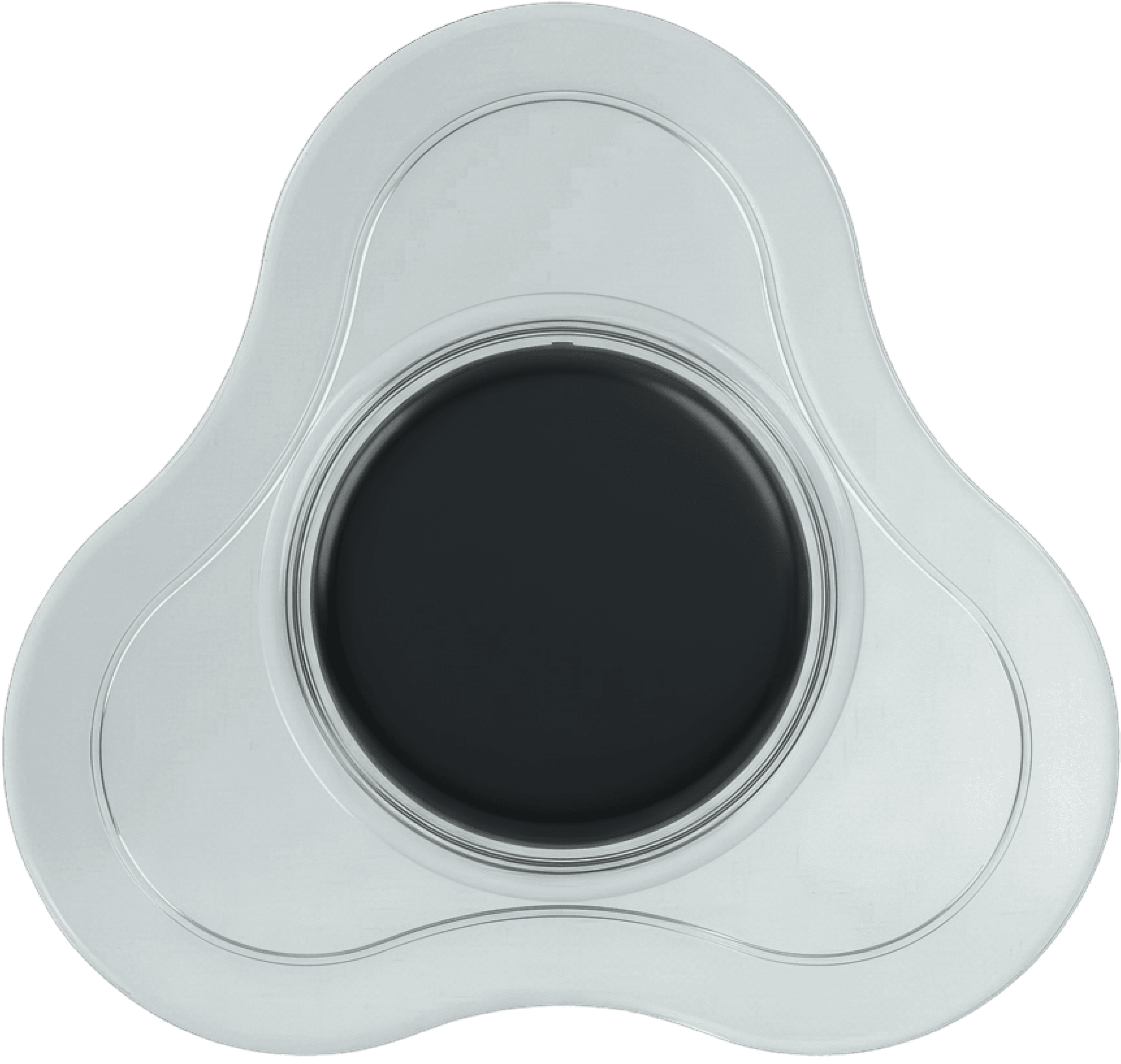
The sensor itself has a small display showing the patient's assigned ID and triage category — IMMEDIATE, URGENT, or DELAYED — directly on the device, so any responders know their status immediately. An LED strip and a piezo buzzer provide local alerts when a status changes. The device is built around three core components: a pulse oximeter, a temperature sensor, and a GPS module for live positioning.
The sensor itself has a small display showing the patient's assigned ID and triage category — IMMEDIATE, URGENT, or DELAYED — directly on the device, so any responders know their status immediately. An LED strip and a piezo buzzer provide local alerts when a status changes. The device is built around three core components: a pulse oximeter, a temperature sensor, and a GPS module for live positioning.
The sensor itself has a small display showing the patient's assigned ID and triage category — IMMEDIATE, URGENT, or DELAYED — directly on the device, so any responders know their status immediately. An LED strip and a piezo buzzer provide local alerts when a status changes. The device is built around three core components: a pulse oximeter, a temperature sensor, and a GPS module for live positioning.
The Hub
The Hub
The hub is designed to hold an overview multiple patients simultaneously. A dedicated navigation feature helps individual paramedics find their way to the right patient across a chaotic scene.
The hub is designed to hold an overview multiple patients simultaneously. A dedicated navigation feature helps individual paramedics find their way to the right patient across a chaotic scene.
The hub is designed to hold an overview multiple patients simultaneously. A dedicated navigation feature helps individual paramedics find their way to the right patient across a chaotic scene.
The hub is designed to hold an overview multiple patients simultaneously. A dedicated navigation feature helps individual paramedics find their way to the right patient across a chaotic scene.
P09
P09
P09
124BPM
124BPM
124BPM
·
·
·
96%
96%
96%
·
·
·
36.6°C
36.6°C
36.6°C
Triage Status Changed. Proceed to patient
Triage Status Changed. Proceed to patient
Triage Status Changed. Proceed to patient
P02
P02
P02
151BPM
151BPM
151BPM
·
·
·
100%
100%
100%
·
·
·
37.0°C
37.0°C
37.0°C
Triage Status Changed. Proceed to patient
Triage Status Changed. Proceed to patient
Triage Status Changed. Proceed to patient


The Application
The Application
When a triage status changes, Petal alerts the team immediately, showing which patient needs attention and guiding the responsible paramedic directly to their location on the site map via the navigation view. Responders can tap into any patient on the priority list and be directed straight to them.
When a triage status changes, Petal alerts the team immediately, showing which patient needs attention and guiding the responsible paramedic directly to their location on the site map via the navigation view. Responders can tap into any patient on the priority list and be directed straight to them.

Outlook
Outlook
The current version of Petal addresses the chaos of the scene itself, but the information collected doesn't need to stop there. A next step would be the seamless handover of recorded patient data directly to the receiving emergency room, giving hospital teams a full picture before the patient even arrives. Further ahead, a predictive layer could use the continuous vital sign data to flag deteriorating conditions before they become critical.
The current version of Petal addresses the chaos of the scene itself, but the information collected doesn't need to stop there. A next step would be the seamless handover of recorded patient data directly to the receiving emergency room, giving hospital teams a full picture before the patient even arrives. Further ahead, a predictive layer could use the continuous vital sign data to flag deteriorating conditions before they become critical.
The current version of Petal addresses the chaos of the scene itself, but the information collected doesn't need to stop there. A next step would be the seamless handover of recorded patient data directly to the receiving emergency room, giving hospital teams a full picture before the patient even arrives. Further ahead, a predictive layer could use the continuous vital sign data to flag deteriorating conditions before they become critical.


© 2026 Elena Fabrikant. All rights reserved.
HOME
OVULATION
© 2026 Elena Fabrikant. All rights reserved.
Back to work
Petal -
Situational Awareness
2026
The prehospital triage process, remains analog and static to this day. First responders work under extreme time pressure, high cognitive load, and with incomplete information and Patients’ conditions can change without the triage team noticing.
Proposal
In Triage Processes, there is a clear gap here between what happens in the field today and what would be possible by transferring process data into the digital realm. Petal observes how we could maintain continuous visibility across patients, so teams know who needs to be treated and transported first.
This work was created in a group of three as part of the Minor User Experience at Zurich University of the Arts (ZHdK), supervised by Martin Meier and Florian Wille and got handed in as a proposal for the IDR Grant.
Role
UI Design
3D
UX Design
Softwares used
Figma
Blender
Onshape
Weavy AI
Category
Digital and physical service

Petal
Petal consists of two parts: a lightweight wearable device ans a shared interface for the triage team.
The wearable continously tracks vital signs and transmits this data to the hub. The hubs interface shows triage status as a prioritized list with location, so responders always kno where everyone is and who is detoriating.
The Research Process
We conducted desk research and expert interviews how triage actually works in the field and where the critical breakdowns happen. What would actually help a first responder who is already overwhelmed?
The Sensor
The sensors display showing the patient's assigned ID and triage category. An LED strip and a buzzer provide local alerts when a status changes. The device is built around three core components: a pulse oximeter, a temperature sensor, and a GPS module for live positioning.
The Hub
The hub is designed to hold a simultaneous overview. A dedicated navigation feature helps individual paramedics find their way to the right patient across a chaotic scene.
The Application
When a triage status changes, Petal alerts the team immediately, showing which patient needs attention and guiding the responsible paramedic directly to their location on the site map via the navigation view. Responders can tap into any patient on the priority list and be directed straight to them.
Outlook
The current version of Petal addresses the chaos of the scene itself, but the information collected doesn't need to stop there. A next step would be the seamless handover of recorded patient data directly to the receiving emergency room, giving hospital teams a full picture before the patient even arrives. Further ahead, a predictive layer could use the continuous vital sign data to flag deteriorating conditions before they become critical.